A Good Space Hack for the Voyagers
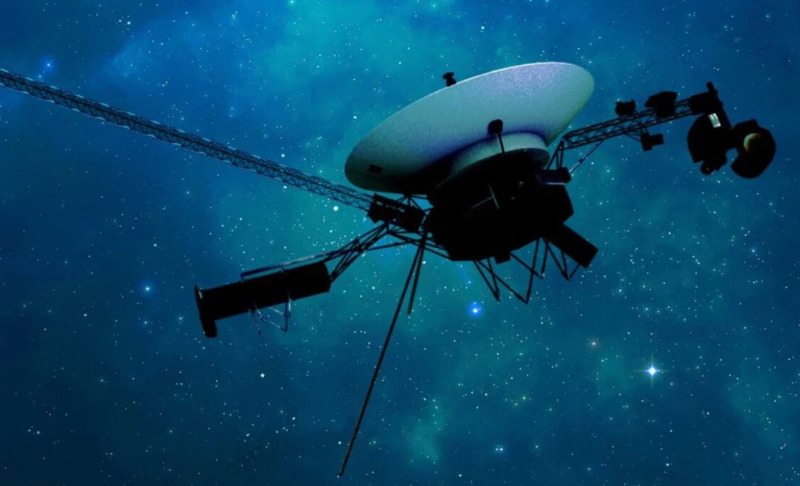
You know, we often use the word "hack" with a bit of a wince. We think of something unauthorized, a breach of trust, or a sneaky way to bypass the rules. But there is another side to the word—the side that speaks of elegance, of a clever, resourceful solution to a daunting problem. We see this beautifully illustrated in the story of NASA’s Voyager 1. This magnificent, lonely relic of 1977 is currently hurtling through the interstellar dark at 35,000 miles per hour, roughly 15 billion miles away from us. It is a feat of engineering, but it is also a story of managing scarcity.
The challenge NASA faces is one we all understand on some level: how do you keep going when your resources are steadily diminishing? The probe relies on the natural radioactive decay of plutonium-238 for power, and as that isotope decays, the energy output drops. But there is a profound irony here. The "waste heat" produced by the spacecraft's electronics—something we usually view as a mere byproduct or even a flaw—is actually the very thing that keeps the instruments from freezing in the deep cold of space. To preserve the mission, engineers are now employing a "power-saving hack," toggling key components on and off in a coordinated sequence. They tested this rhythm on Voyager 2 first, and because it worked, they are now applying it to the more distant Voyager 1. It is a way of finding a new, sustainable cadence in the face of decline.
We are currently watching toward a historic milestone: Voyager 1 is approaching a distance of one light-day from Earth. To put that in perspective, that is 173 times the distance between the Earth and the Sun. Once it passes that point, a message sent from Earth will take a full twenty-four hours just to reach the probe. There is something deeply moving about that—the idea of a man-made messenger pushing into the vastness, carrying our history even as the communication lag grows. As we approach the spacecraft's 50th anniversary in September 2027, we aren't just celebrating a triumph of technology; we are celebrating the human persistence to keep reaching out, even across the impossible silences of the cosmos.